
Finding strength through resilience is something most of us NFL players can relate to on a physical level. We don’t play perfectly, maybe we miss a tackle, go the wrong way on a play, lose focus, or simply don’t perform at our best. Yet somewhere inside, we find the courage to improve. We push back against the voice that says we failed, we find the bottom, and we get up again. There’s always a floor beneath us, a place to reset, stand up, and power through.
But what happens when that same approach doesn’t translate off the field, like in a work setting, a marriage, or parenting, where the rules are different. There’s no whistle, no clear reset, no immediate feedback from a coach. When emotions overwhelm us, and isolation creeps in, when thoughts begin to race and concentration slips, it can feel like there’s no clear way forward.
The same resilience that helps us physically doesn’t always show up the same way mentally or emotionally. The truth is, resilience in everyday life requires a different set of tools, ones that are quieter, more intentional, and often more vulnerable.
When feeling emotionally overwhelmed, the first step is to slow things down. Instead of trying to “push through,” it’s important to PAUSE. Take a few minutes to breathe deeply, step away, and acknowledge what you’re feeling. Sometimes acknowledging what you’re feeling can create space between you and the stress. The feeling of being overwhelmed builds when everything feels critical and urgent; slowing down reminds us that not everything needs to be solved at once and maybe not even solved today.
Social isolation is another common struggle. Sometimes we think it is easier to withdraw than to explain what we’re going through. Isolation often amplifies the problem. Reaching out to someone, even in a small way, can make a difference. Text me, call me, sit with someone you trust to help break the cycle. You don’t need to have the perfect words. Connection itself is often the first step toward healing. Even sitting together in silence, quiet companionship, can have benefits.
For some, coping can be harmful if turning to substance use. This is a more complicated challenge. Recognizing this pattern early is important. Try replacing the habit with healthier outlets. Walking, journaling, listening to music, or speaking with a counselor can begin to help you shift away from the harmful behavior.
Seeking professional help is not a sign of weakness; it’s a sign of awareness and true strength.
Racing thoughts and difficulty concentrating can also be overwhelming. One helpful approach is grounding; do your best to focus on the present moment. Try writing down your racing thoughts to get them out of your head, then focus on a simple task. These small practices help quiet the noise and bring back a sense of control.
Be careful how you speak to yourself. On the field, we shake off a mistake and move forward. Off the field, we can be much harder on ourselves. Calling ourselves a failure, or that we’re not enough, or not smart, and that we should have all the answers, only deepens the struggle. Resilience is learning to extend ourselves the same grace we would offer a teammate, appreciating effort, not just outcomes.
You see, there is still a “floor” in these moments, even if it doesn’t feel like it. It’s not as visible, but it does exist. Recall the small actions that begin to help you stand up – PAUSE instead of react, reach out instead of withdraw, choose awareness over avoidance, and practice having compassion for yourself over self-criticism. Don’t power through alone. Know when to slow down, when to lean on others
…and then take one step forward.

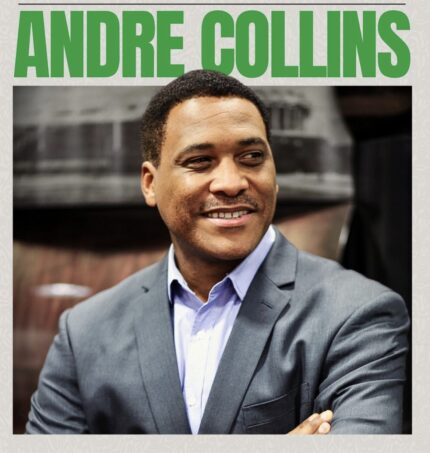
Andre Collins
Executive Director